An official website of the United States government
A .mil website belongs to an official U.S. Department of Defense organization in the United States.
A lock (lock ) or https:// means you’ve safely connected to the .mil website. Share sensitive information only on official, secure websites.

Text/HTML

Add Content...

Home : Library : Chairmans Leadership Library : Philosophy : History
Books

Meditations

Marcus Aurelius

Summary: A collection of personal reflections by the Roman emperor, this book serves as the foundations of Stoicism and offers timeless wisdom on resilience, virtue, and self-discipline.

Why Read It: A timeless guide to self-discipline, humility, and resilience from a leader who bore the weight of empire. Marcus Aurelius’ reflections model how to hold fast to principle and clarity even while navigating complexity and conflict. It is a classic and timeless work that I reread once a year and often refer too. My copy is tattered and covered in notes.

Man’s Search for Meaning

Vicktor Frankl

Summary: Recounts the author’s harrowing story of life in Nazi concentration camps and how the experience shaped his philosophical theories on suffering, purpose, and resilience.

Why Read It: Beyond its enduring influence as a story of the hope and triumph during one of humanity’s darkest periods, Frankl argues humans are driven not by pleasure, power, or distraction but by achievement, relationships, and overcoming challenges (or suffering). His theories explain how a life of service can offer far more satisfaction than the pursuit of materialistic gain. 

Range

Peter Epstein

Summary: Offers a compelling counter-narrative to the popular belief that early specialization is the key to success and how generalists often outperform specialists in complex, unpredictable fields. It explains why breadth matters as much as depth.

Why Read It: Challenges the belief that narrow specialization is the only path to mastery. For leaders, it reinforces the value of broad experience, curiosity, and adaptability—traits that enable innovation

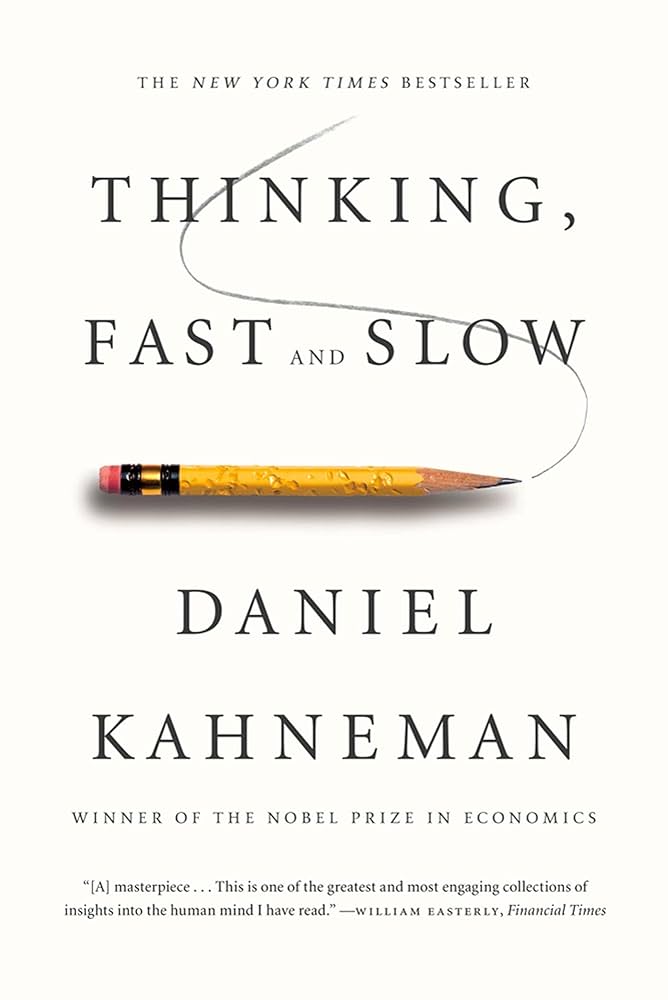
Thinking Fast and Slow

Daniel Kahneman

Summary: Explains how our minds operate via two systems: fast, instinctive thinking and slow, deliberate reasoning. Uncovers the biases and mental shortcuts that shape decisions, often unconsciously.

Why Read It: Illuminates how we think, decide, and act—often in ways that defy logic. Understanding the brain’s fast and slow processes sharpens decision-making, helping leaders anticipate bias, avoid costly errors, and adapt with speed and precision.