An official website of the United States government
A .mil website belongs to an official U.S. Department of Defense organization in the United States.
A lock (lock ) or https:// means you’ve safely connected to the .mil website. Share sensitive information only on official, secure websites.

Home : Library : Chairman's Leadership Library : Human Performance


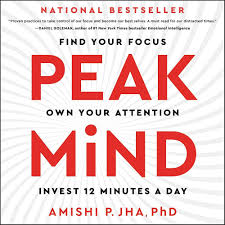
Peak Mind

Amishi Jha

Summary: Jha explains how attention works and how it can be trained to improve focus, resilience, and performance. Drawing on neuroscience and military research, she shows how stress degrades attention and offers practical mindfulness techniques to strengthen cognitive control, situational awareness, and decision-making under pressure.

Reasons to Read: Highly relevant for Joint Force professionals because it addresses a foundational yet often overlooked warfighting advantage: attention control. Modern operations demand constant multitasking across physical and digital domains, where distraction, cognitive overload, and fatigue directly degrade performance, situational awareness, and decision quality. For leaders, the book reinforces that cognitive readiness is trainable and should be treated like physical fitness. 

What Every Body is Saying

Joe Navarro

Summary: Explains how to read nonverbal behavior to better understand others’ thoughts, emotions, and intentions. Drawing on FBI experience, Navarro outlines body language cues, emphasizing context and clusters, helping readers detect discomfort, confidence, deception, and authenticity through observation of subtle physical signals.

Reasons to ReadEnhances situational awareness and interpersonal effectiveness. Useful in negotiations, engagements, and leadership interactions across diverse environments. 

Thinking Fast and Slow

Daniel Kahneman

Summary: Explains systems of thought: fast, intuitive thinking and slow, deliberate reasoning. It explores cognitive biases, heuristics, and decision-making errors, showing how these systems shape judgment. The book illustrates why people make mistakes and how understanding these tendencies can improve reasoning and daily choices.

Reasons to ReadCritical for improving decision-making in complex environments. The book builds awareness of biases, helping people think more critically and deliberately. It provides practical understanding to slow down when needed, question assumptions, and make clearer, more rational judgments in personal, professional, and complex situations daily.

The Road Less Stupid

Keith Cunningham

Summary: Emphasizes avoiding costly mistakes in business and life through deliberate thinking. Cunningham advocates scheduling “thinking time” to analyze problems, question assumptions, and improve decisions. The book focuses on recognizing cognitive traps, sharpening judgment, and consistently making smarter, more disciplined choices over time.

Reasons to Read: Offers practical methods to think more clearly, reduce errors, and make better decisions in complex situations. The concept of intentional thinking time helps improve problem-solving and accountability. By learning to identify flawed reasoning and biases, readers can strengthen judgment, avoid unnecessary mistakes, and achieve consistent results personally and professionally.