An official website of the United States government
A .mil website belongs to an official U.S. Department of Defense organization in the United States.
A lock (lock ) or https:// means you’ve safely connected to the .mil website. Share sensitive information only on official, secure websites.

Home : Library : Chairmans Leadership Library : Leadership

How to Win Friends and Influence People 

Dale Carnegie

SummaryCarnegie provides practical principles for communication, persuasion, and relationship-building, emphasizing empathy, listening, and respect as the foundation of influence.

Reasons to ReadEnhances effectiveness in joint, interagency, and coalition operations where influence often outweighs authority. Strengthens communication skills necessary for building trust, aligning stakeholders, and achieving unity of effort across diverse organizations.

The Art of Command

Harry S. Laver and Jeffrey J. Matthews

SummaryExplores how effective military leaders exercise command through judgment, leadership, and decision-making in complex environments. Using historical case studies, it highlights traits such as adaptability, moral courage, and understanding human factors, showing that command is both an art and a disciplined practice shaped by experience. Case studies include figures such as Lee at Gettysburg, Grant in the Civil War, Rommel in WWII, and Slim in Burma.

Reasons to Read: From the historical examples Joint Force members can gain insight into the human and cognitive aspects of command beyond doctrine. The book strengthens judgment, adaptability, and leadership under uncertainty. It reinforces the importance of experience, ethical decision-making, and understanding people to  help leaders operate effectively in dynamic and ambiguous strategic environments.

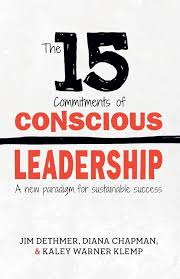
15 Commitments of Conscious Leadership

Jim Dethmer, Diana Chapman, and Kaley Warner Klemp

Summary: Presents a framework for leading from responsibility rather than blame. The authors encourage leaders to increase self-awareness, foster trust, embrace candor, and shift from reactive behaviors to intentional choices that improve relationships, performance, and organizational culture.

Reasons to Read: Military leaders operate in high-stakes environments where trust, accountability, and communication directly affect mission success. This book provides practical tools for managing emotions, receiving feedback, resolving conflict, and building resilient teams. Its emphasis on ownership and self-awareness helps leaders strengthen both organizational effectiveness and professional relationships.

The Infinite Game

Simon Sinek

Summary: Argues that leaders thrive not by winning short-term battles but by adopting an "infinite mindset" focused on long-term values and resilience. Sinek contrasts finite games with infinite ones to rethink competition and strategy and uses a broad range of case-studies (Apple, Patagonia, and U.S. Marine Corps) to support his theories.

Reasons to ReadAligns closely with strategic competition and persistent global conflict. Helps Joint Force leaders prioritize endurance, alliances, and institutional resilience over short-term victories, supporting sustained advantage in long-duration campaigns and multi-domain competition.

Words That Work: It's Not What You Say, It's What People Hear

Dr. Frank Luntz

SummaryExplores how language shapes understanding, perception, and behavior. Luntz demonstrates how small changes in wording can significantly influence how messages are received.

Reasons to ReadStrengthens strategic communication, particularly in information operations and senior-level engagement. Helps Joint Force leaders craft messages that resonate clearly across military, civilian, and international audiences.

Legacy: What the All Blacks Can Teach Us

James Kerr

Summary: Explores the New Zealand All Blacks rugby team’s sustained excellence, highlighting cultural principles such as humility, accountability, and shared ownership as the foundation of high performance.

Reasons to ReadOffers actionable insights into building elite organizational culture. Joint Force leaders can apply these principles to foster cohesion, accountability, and decentralized leadership—key attributes for effective mission command.